
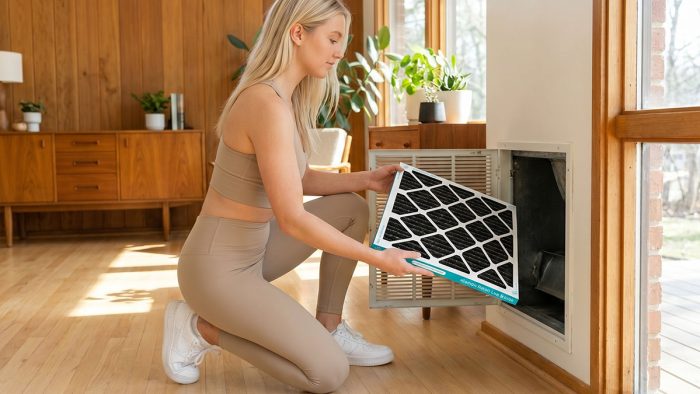
We believe taking care of the air in your home should be one of the easiest healthy habits you keep. After all, you breathe more than 20,000 times a day, and much of that air passes through your home’s filtration system.
At TRU Filtered Air, we’ve made remembering to replace your filters ridiculously easy. Premium carbon-backed air filters delivered automatically to your door, exactly when it’s time to replace them.
But first, you need to know where they go.
Whether you’re a first-time homeowner or you’ve simply never thought about it, finding your furnace filter is easier than you might think. Here are 7 places to check if you’re wondering where your furnace filter is located.
Where is furnace filter located? Follow the return air (not the supply)
Your filter sits on the return air side, meaning it catches dust and lint as air is pulled into the system, before it reaches the blower. So instead of chasing every vent you see, start with one question: where does air go back to your HVAC (heating, ventilation and air conditioning) equipment?
If you need a quick orientation, this walkthrough on locating your furnace and changing the filter lays out the common “home base” areas: utility closets, basements, garages, attics, and crawl spaces.
Where is furnace filter located on the furnace itself? Check the return duct connection
If your filter is at the unit, the most common furnace filter location is where the return duct meets the furnace or air handler. That connection is the system’s intake. It usually looks like:
- A thin slot where a 1-inch filter slides in and out
- A small hinged filter door built into the ductwork
- A filter track at the bottom or side of the cabinet
Quick clue: the return side is often the largest single duct connected to the unit. Supply ducts branch out to rooms like a tree. Returns are more like a main road back home.
Where is furnace filter located in upflow, downflow, and horizontal systems?
Same rule, return side first, but the access point changes depending on how the unit is installed. The patterns below match what homeowners typically see, including the layouts summarized in this guide to common furnace filter locations.
| System type | Air moves… | Where the filter usually is | What you’ll notice |
|---|---|---|---|
| Upflow (vertical) | Upward | Lower section near the blower | A filter slot low on the unit or in the return plenum |
| Downflow (vertical) | Downward | Upper section where air enters | Access higher up, sometimes above the cabinet |
| Horizontal | Sideways | Intake side in a sliding rack | A pull-out track, often in an attic or crawl space |
If you’re standing there thinking, “Mine doesn’t match any of this,” you’re still not stuck. It just means your filter is probably in one of the next few spots.
Where is furnace filter located if it’s behind a return vent?
In a lot of homes, the filter isn’t at the furnace at all. Instead, you find the air filter in house return vents, behind a big louvered grille on a wall or ceiling. This is common when builders want easy access without sending you into an attic.
Returns can be easy to confuse with supply vents, so use a low-tech trick. With the system running, hold a tissue near the grille:
- If the tissue gets pulled toward the vent, that’s a return, and the filter may be behind it.
- If air pushes the tissue away, that’s a supply, and there won’t be a filter there.
It’s also normal to have more than one return. A solid rule of thumb is to walk the house and check the larger grilles in hallways and main living spaces. Some setups use multiple returns, and those returns may each need their own filter.
7 places to check if you still can’t find your furnace filter location
If you’ve checked the unit and the obvious return grilles, run this list like a quick sweep. No drama, just the usual suspects.
- Inside the furnace or air handler cabinet: Look for a narrow slot on the side or bottom, or a small filter door.
- In the return duct right next to the unit: Sometimes the filter is in a short duct section attached to the furnace, not inside the cabinet.
- Behind a wall return grille: Often in a hallway or central living area.
- Behind a ceiling return grille: Common in newer builds. Easy to miss if you never look up.
- Behind a large door-style return in a hallway: These can look like an oversized vent with a latch.
- In a dedicated media cabinet: A separate filter box between the return duct and the unit, sometimes designed for thicker 4-inch or 5-inch filters.
- Inside a utility closet access panel: Especially in apartments, townhomes, and smaller houses with a closet air handler.
One more possibility, and it happens: the filter is missing. It might have been pulled during service or never installed by a previous resident. Running without a filter lets dust settle into the blower and coil over time, so if you can’t find one anywhere, it’s worth pausing before you crank the system for the season.
How to confirm you found the right filter (and install it the right way)
You found a filter. Great. Now give yourself one minute to make sure it’s the right one.
- Confirm the size on the filter frame: The printed size is the nominal size (rounded). The actual size is usually slightly smaller. Write down the full size notation, like 20x20x1.
- Check the arrow for airflow direction: The arrow should point toward the blower, meaning toward the equipment, not out toward the room.
- Look for a snug fit: You want it seated without forcing it. Big gaps around the edges let air bypass the filter.
Small note that saves a lot of second guessing: if your filter is carbon-backed, it can look dark from day one. Dark does not automatically mean “spent.”
How often to replace your furnace filter (so airflow stays steady)
The easiest rhythm for most homes is simple: peek at it monthly, replace about every three months. If your home has pets, a dusty climate, or you run the system constantly, you may need to swap more often.
We’re based in Tempe, Arizona, so we get it. Desert dust and long cooling seasons can turn “every three months” into “sooner than you planned.”
- Every 1 to 2 months: pets, heavy dust, smoke season, or you just want consistency
- About every three months: many average households
- Earlier than your calendar says: if airflow drops, dust builds up faster than usual, or the filter looks visibly packed
One more Air Wellness truth we live by: you can buy a great filter once, but if you forget to change it, the benefit fades quietly. The habit matters.
Make filter changes automatic (one decision, then it runs in the background)
The reason most filters don’t get changed is not laziness. It’s the whole loop: measuring, guessing, standing in a hardware store aisle full of almost-right sizes, then realizing you bought the wrong one or shoved it under the sink and forgot.
Tru Filtered Air exists to flip that. We make one carbon-backed MERV 11 filter in a wide range of sizes, including ones many stores don’t stock, and we ship it free on your replacement schedule. The filter showing up at your door is the reminder. Nothing to remember, nothing to forget.
If you want to see how we build them, start with our carbon-backed MERV 11 HVAC filters. When you’re ready to match your exact size and set your delivery schedule, go to Shop Filters.
And if you’re still sorting out what MERV even means, our plain-English post How are air conditioning and heating filters rated? clears it up without turning it into homework.
Need personal help choosing the right filter or have installation questions? Contact Tru Filtered Air support for fast answers.
Curious about HVAC solutions for Arizona homes, including tips for beating the dust? Check out our post on the best air filters for dust in Arizona.
FAQ: Furnace filter location
Where is furnace filter located most of the time?
Most often, it’s in a slot at the furnace or air handler on the return side, right where the return duct connects. If it’s not there, your next best bet is behind the largest return vent grille in your home.
How do you find air filter in house layouts with multiple returns?
Do a quick walk-through and look for the biggest grilles, usually in hallways, open living areas, or near central parts of the home. If you have multiple returns, you may have multiple filters, one behind each return grille.
What does a return vent look like compared to a supply vent?
Returns are typically larger and pull air in. Supply vents are smaller and push air out. The tissue test is an easy way to confirm which is which while the system is running.
My filter is black. Does that mean it’s dirty?
Not always. Carbon-backed filters can look dark the day you open the box because activated carbon is naturally dark. If the filter looks fuzzy, clogged, or packed with dust, that’s different. Use visible buildup and airflow as your cues, not color alone.
What if I can’t find a filter anywhere?
Check for a dedicated media cabinet attached to the return duct, or a hidden panel inside a utility closet. If you still come up empty, the filter may be missing. At that point, it’s smart to have the system checked before running it hard for the season.
Conclusion
Now you know what to do when you catch yourself asking, where is furnace filter located? Start at the furnace or air handler, stay on the return side, then check return grilles and any separate filter cabinet. Once you find it once, you’ve basically mapped your home’s air pathway.
If you want clean air without the measuring and the remembering, we’ll keep it simple: premium carbon-backed MERV 11 air filters, delivered automatically to your door, exactly when it’s time to replace them. Pick your size once, set your schedule, and keep better air on repeat.