You filter the water you drink. You carefully choose the food you eat. You even track the sleep you get. But when was the last time you thought about the air filter in your home?
It’s one of those healthy habits that’s easy to forget. When did you last change it? What size do you need again? And where did you put those extra filters you bought at the hardware store six months ago?
At TRU Filtered Air, we believe taking care of your home’s air should be ridiculously easy. One carbon-backed MERV 11 filter, automatically delivered to your door when it’s time to replace it. The delivery is the reminder. No guessing, no hardware store runs, and one less thing to remember.
So, how often should you change your air filter? Let’s break down the recommended schedule, what can affect it, and why keeping a consistent replacement routine is one of the simplest ways to make better air part of your everyday life.
How Often to Change Your Air Filter: Start With This Baseline
If you use a standard 1-inch pleated filter, a practical starting point for how often to change your air filter is every 1 to 3 months. Most households land around the 90-day mark, then adjust based on pets, allergies, dust, and how hard the system is running. That baseline lines up with Consumer Reports’ guidance on HVAC filter replacement.
One quick note that saves a lot of frustration: yes, thicker filters often last longer, but you can only use a thicker filter if your system is built for that depth. Your filter slot decides, not your ambition.
Want the most low-drama approach? Check your filter monthly and replace it when it’s visibly loaded. It’s a simple rhythm that tends to work well during heavy heating and cooling seasons, similar to the practical advice in This Old House’s recommendations for furnace filter change frequency.
How Often to Change Your Air Filter: A Simple Schedule That Fits Real Life
The “best” schedule is the one you can stick with. Pick a cadence that feels realistic, then tighten it if your filter gets dirty faster than expected. Here’s a simple starting chart for a 1-inch pleated filter.
| Home situation | Suggested schedule (1-inch filter) | What’s going on |
|---|---|---|
| Typical home, no pets, average HVAC use | Every 60–90 days | Normal dust load and normal runtime |
| One pet (especially a shedder) | Every 45–60 days | More hair and pet dander circulating |
| Multiple pets | Every 30–45 days | The filter loads faster, plain and simple |
| Allergy or asthma triggers in the home | Every 30–60 days, check monthly | Consistency matters more when you’re sensitive to indoor air |
| Heavy AC season (hello, desert heat) | Every 30–60 days | More runtime means more air and particles moving through the filter |
| Wildfire smoke or very dusty conditions | Check every 2–4 weeks, replace as needed | Fine particles can overwhelm a filter quickly |
If you’re thinking, “I will absolutely forget all of that,” you’re in good company. Most people do. It’s why we built our delivery schedule around the real replacement cycle, so you don’t have to run your life on a 60-day timer.
How Often to Change Your Air Filter for Furnace vs AC (Same Answer, Same Filter)
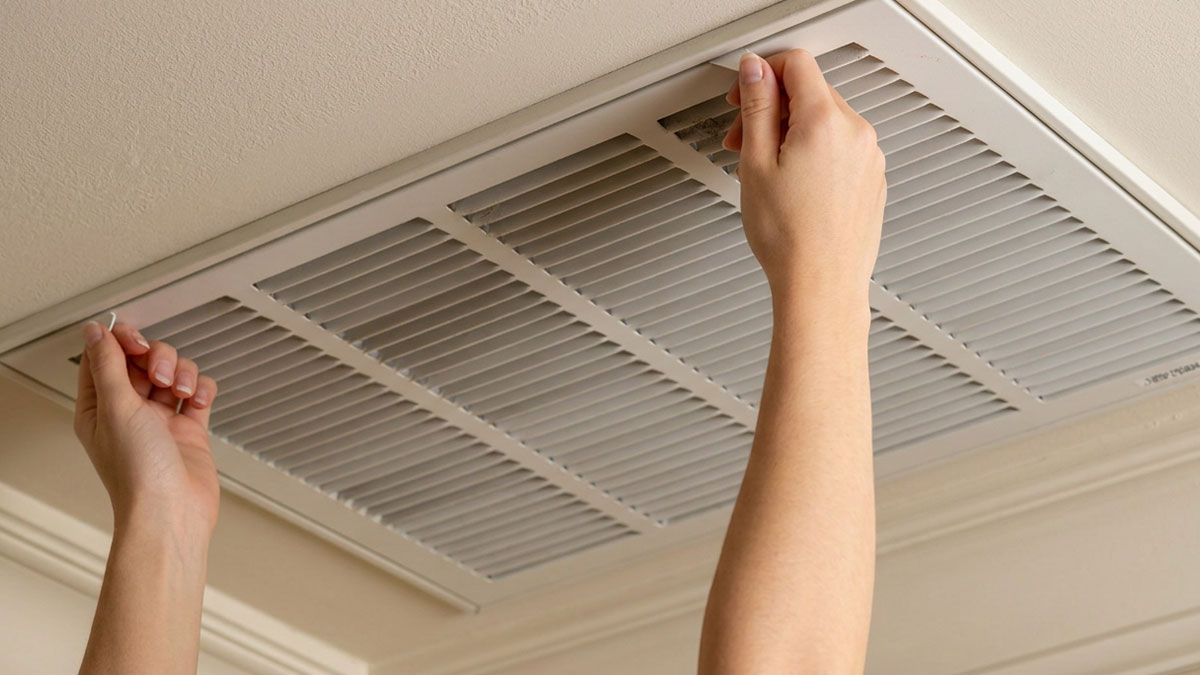
This one trips up a lot of smart people. In most central HVAC (heating, ventilation and air conditioning) systems, the furnace filter and the AC filter are the same physical filter in the same slot. So when you search “how often to change furnace filter,” you’re usually asking the same question as how often to change your air filter.
If seasonal milestones help you remember, use them. “First hot week” and “first cold week” beats “what did I do 87 days ago?” every time.
Why Changing Late Gets Annoying Fast (Comfort, Efficiency, Wear)
Your HVAC filter has two jobs that have to happen at once: catch particles and still let air move. As it loads up, airflow drops. When airflow drops, your system has to work harder to do the same job. That can show up as:
- Rooms that feel stuffy or take longer to cool or heat
- Weak airflow from vents
- Longer run times, especially during peak summer
It can also affect energy use. The U.S. Department of Energy is often cited for the idea that swapping a dirty filter for a clean one can reduce an air conditioner’s energy use by 5% to 15%.
In hot months, restricted airflow can contribute to coil icing. In cold months, it can contribute to overheating and nuisance shutdowns. Nothing has to “break” for the filter to be costing you comfort.
What Makes You Need to Change Your Air Filter More Often
Real homes have real variables. If your schedule needs to be tighter than the “typical home” line, that’s not a failure. It’s just information. Here are the big ones:
- Pets: Fur is obvious, but pet dander is the sneaky part that keeps circulating.
- High HVAC runtime: If your AC runs for long stretches, the filter is working overtime too.
- More people in the house: More movement, more fibers, more everyday dust.
- Construction nearby or desert dust: Your filter can load up fast when the outdoors is gritty.
- Smoke season: Fine particles can shorten filter life dramatically, sometimes in weeks.
If you live in Arizona like we do, you already know that “dusty” is not a mood, it’s a season. Your replacement schedule should match your environment, not fight it.
MERV Ratings, In Plain English (And Why We Chose MERV 11)
MERV stands for Minimum Efficiency Reporting Value. It’s the scale that tells you how well a filter captures particles at different sizes. Higher MERV usually means finer particle capture, but it can also mean more resistance to airflow if your system is not designed for it.
Most homes do well in the MERV 8 to 13 range. The sweet spot is the filter that captures what you care about while still letting your system breathe. If you want the quick, readable breakdown of what those numbers mean, start with our guide on MERV ratings for air conditioner and furnace filters.
We build one carbon-backed MERV 11 filter because it’s a strong balance point. You get high-efficiency particle filtration plus a bonded activated carbon layer that helps capture odors, gases, and VOCs (volatile organic compounds) that particle-only filters can miss.
The #1 Reason Filters Stop Doing Their Job: You Simply Forgot
Most filters do not “fail” because someone chose the wrong thing in the aisle. They fail because time passed, life happened, and the filter stayed put.
That’s normal. Even the old-school home improvement world admits the hardest part is remembering and staying consistent. Bob Vila’s guide to furnace filter change frequency calls out how easy it is to lose track of when you last replaced it.
This is exactly where a delivery schedule changes the game. You make the decision once. Your replacement shows up right when it’s time. Nothing to remember, nothing to forget.
How to Tell It’s Time to Change Your Air Filter (Even Before Your Schedule)
Calendars are helpful, but your filter gives you the real answer. If you check it monthly during peak seasons, you’ll rarely get caught off guard.
- Dust loading across the pleats: You’ll see a buildup that looks like a gray “blanket” on the intake side.
- Airflow feels weaker: Not always the filter, but it’s the easiest first check.
- Your home gets dusty faster: If you’re wiping surfaces more often, take a look at the filter.
- Longer heating or cooling cycles: If it takes longer to feel comfortable, restricted airflow could be part of the story.
One Tru-specific heads-up: our filters have a dark carbon layer from day one. A black layer is not automatically a dirty filter. Look at dust across the pleats and how your airflow feels, not the carbon color.
Make Filter Changes Easy: Size, Arrow Direction, Then Put It on Autopilot
If changing your filter is going to become a habit, three things need to be painless: buying the right size, installing it the right way, and not relying on memory.
- Get the size right: Start with the numbers printed on the filter frame, then confirm what you have if anything looks off. Our guide to nominal vs actual air filter size makes that whole situation way less confusing.
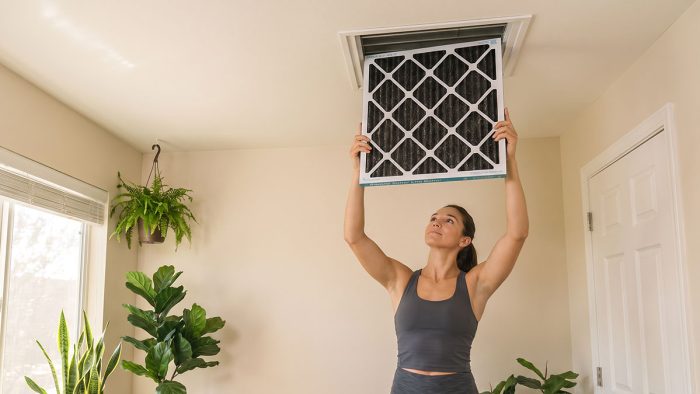
- Follow the arrow: Install the filter so the arrow points in the airflow direction, toward the blower. If you want the quick visual, use our post on furnace filter direction and arrow orientation.
- Stop relying on reminders: The most reliable reminder is a filter showing up at your door when you need it.
If you’re ready to make this part of your health stack instead of another forgotten task, you can choose your size and replacement cadence in Shop Tru Filtered Air filters. We’ll handle the timing from there.
FAQ: How Often to Change Your Air Filter
How often should you change your air filter in Arizona or other hot climates?
If your AC runs hard for months, plan on every 30 to 60 days for a 1-inch pleated filter, and check monthly during peak season. More runtime usually means faster loading.
How often to change furnace filter if you have pets?
Most pet households do best around 30 to 60 days, depending on shedding and how many pets you have. If you’ve got multiple heavy shedders, 30 to 45 days is often more realistic.
Is it okay to change my air filter “too often”?
If you’re using the right size and a reasonable MERV rating for your system, replacing early is generally fine. The bigger risk is waiting too long and restricting airflow.
What MERV should I use if I want cleaner air but I’m worried about airflow?
Most homes do well in MERV 8 to 13. MERV 11 is a popular middle ground because it captures a wide range of household particles while still being mindful of airflow.
My filter looks dark. Does that mean it’s dirty?
Not always. Some filters, including Tru’s carbon-backed filters, look dark from the start. Look for dust loading across the pleats, reduced airflow, or a filter that’s clearly coated with buildup.
Conclusion: Pick a Schedule, Then Make It Automatic
How often to change your air filter is usually every 60 to 90 days for a 1-inch pleated filter, then more often if you’ve got pets, heavy AC season, smoke, or desert-level dust. The real win is consistency.
We make that consistency easy with premium carbon-backed MERV 11 air filters delivered automatically to your door, exactly when it’s time to replace them. If you want to stop guessing and keep better air on repeat, start with our filter shop. Or, get more practical tips from our guide to choosing the best air filter for your home.