What happens if you don’t change your air filter? Most of the time, nothing “breaks” on day one. Instead, your home slowly starts to feel a little off. More dust on the coffee table, rooms that never quite hit the right temperature, and an HVAC system that seems to run forever.
At Tru Filtered Air, we think your indoor air belongs in your wellness routine, right next to the water filter you trust and the sleep habits you protect. You spend nearly 90% of your life indoors, so the everyday air in your home is the air that shapes your days.
Let’s walk through what a dirty filter actually does, the dirty air filter symptoms people notice first, and a simple way to tell when it’s time to swap it.
What happens if you don’t change your air filter: airflow gets cramped
Your HVAC (heating, ventilation and air conditioning) filter is the gatekeeper for air moving through your return vent and into the system. It grabs dust, pollen, pet dander, and the general “life happens” particles that float around your house.
Over time, the filter loads up. That part is normal. The problem is when it loads up so much that air has to fight its way through. As restriction rises, airflow drops and the system compensates by working harder. Fire & Ice Heating & Cooling explains how a dirty filter increases static pressure and forces the blower to push against more resistance in their breakdown of dirty air filter side effects.
In real life, that shows up like this:
- You feel weaker airflow from supply vents.
- One room is always warmer or colder than the rest.
- Your system runs longer cycles just to keep up.
Dirty air filter symptoms that hit your wallet first
If your utility bill is climbing and you have not changed your thermostat habits, your filter is a smart place to look. When airflow is restricted, the system tends to run longer and the blower works harder to move air.
Even small efficiency losses add up during heavy heating or cooling seasons. U.S. Department of Energy guidance shows us that clean filters can reduce HVAC energy use by roughly 5% to 15% in their overview of symptoms of a dirty air filter.
That is why a filter check is one of the simplest “quick wins” you can do at home. It takes about a minute. It can save you a month of waste.
What happens if you don’t change your air filter: dust stops feeling manageable
You clean the counters. You wipe the shelves. Two days later, it looks like you never touched them.
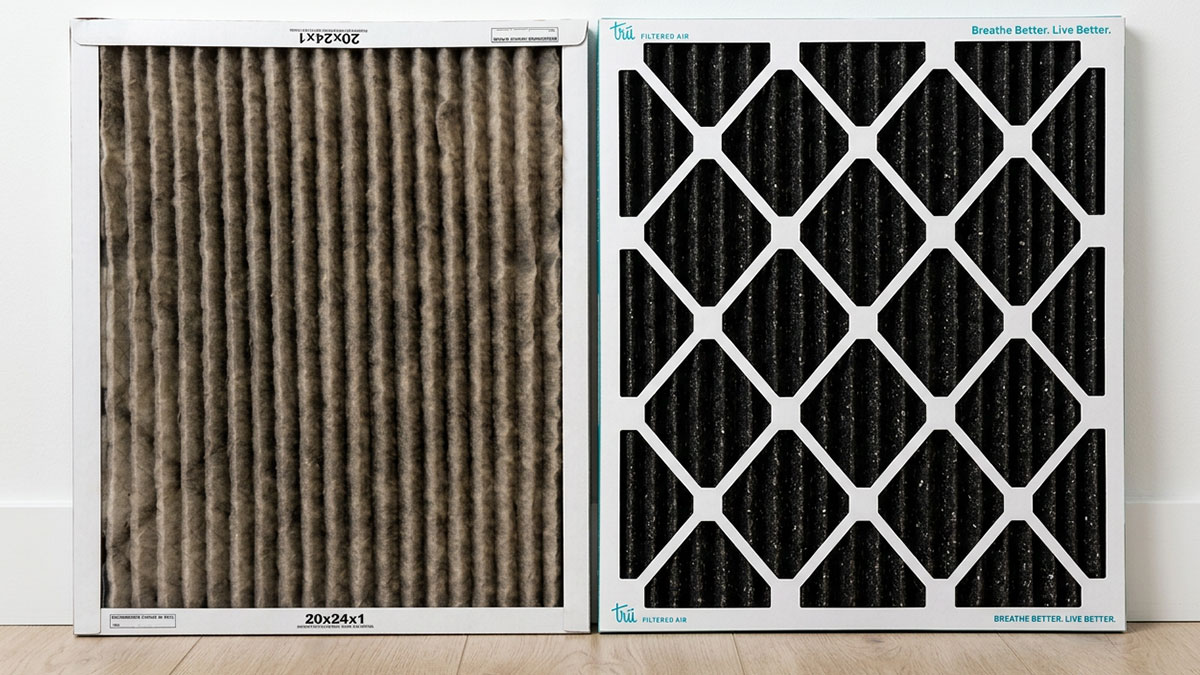
That can be one of the most annoying signs of a dirty air filter, especially if you are already the kind of person who keeps a tidy home. When a filter is overloaded, it can struggle to keep trapping what it used to catch easily, so more particles stay in circulation and eventually settle back onto your surfaces.
If you are noticing dust collecting faster than usual, check two things at the same time:
- The filter itself (is it visibly packed across the pleats?)
- The fit (does it sit snugly in the slot, without gaps?)
Indoor air quality can slip, especially when you are indoors a lot
Most people do not think about indoor air until it feels stale, heavy, or just “not fresh.” That is fair. Air is invisible, and you have a lot going on.
Still, it helps to remember you are living inside that air for most of your day. The EPA notes that indoor air can be up to five times more polluted than outdoor air, depending on the space and sources, in its guidance on indoor air quality.
We are not here to make medical claims or scare you. This is just the practical truth: an overdue filter means you are getting less filtration than you think you are getting. If you have pets, kids, or a household that is sensitive to seasonal pollen, staying on schedule matters.
Dirty air filter symptoms inside the HVAC: icing, overheating, and short cycling
Your HVAC system is designed around a certain amount of airflow. When the filter restricts that airflow too much, the rest of the system feels it.
On the cooling side, reduced airflow can contribute to coil icing, weaker cooling, and more strain. On the heating side, restricted airflow can lead to overheating and safety shutoffs. HVAC.com covers these kinds of warning signs in its guide to common symptoms of a dirty HVAC filter.
No drama needed: replacing a filter is a small habit. Ignoring it long enough can turn into an avoidable service call.
When your vents smell “off,” your filter is usually overdue
Musty or stale odors when the system starts up can come from a few places. But an old filter is a frequent contributor, simply because it has been collecting particles for weeks or months and airflow has not been great.
This is also where we want to clear up a common confusion: Tru filters are carbon-backed, and activated carbon is naturally dark from day one. So a filter looking “black” is not automatically proof it is dirty. What you are watching for is loading, meaning visible dust packed into the pleats and noticeably reduced airflow.
The 60-second dirty air filter test (no tools, no guesswork)
You do not need a gadget to know if your filter is past its prime. Do this instead:
- Turn the system off at the thermostat.
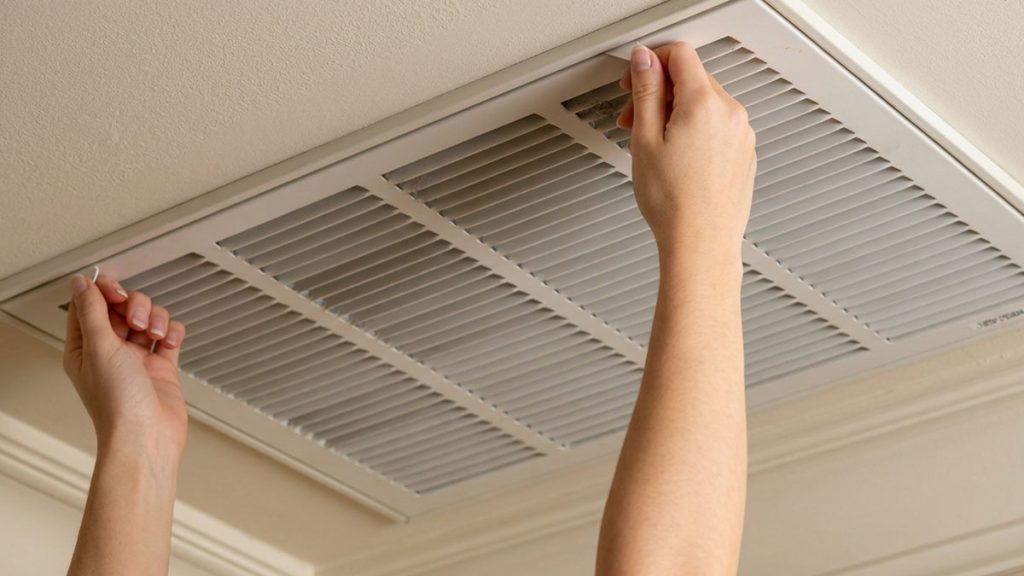
- Slide the filter out of the return vent slot or filter cabinet.
- Hold it up to a bright light.
If barely any light comes through the filter media, you are due. Swap it soon, and do not run your system with no filter in place while you wait.
When you install the new filter, check the arrow on the frame. It should point in the direction of airflow, toward the blower. If you want a quick visual refresher, use our guide to furnace filter direction and the airflow arrow.
How often to change a 1-inch filter (and why most people forget)
For most homes with a standard 1-inch filter, the typical change cadence is every 1 to 3 months. Where you land in that window depends on your real life:
- Pets and pet dander tend to shorten the schedule.
- Dusty climates and wildfire season can shorten it too.
- If your system runs constantly, the filter loads faster.
But honestly, the biggest issue is not that you do not know the guideline. It is that filter changes depend on memory. And memory is a flimsy way to run a wellness habit.
That’s why we built Tru around the part people struggle with most: consistency. We make one carbon-backed MERV 11 HVAC filter in a wide range of standard sizes, including less common sizes many stores do not stock, and we ship it free on a schedule timed to replacement. The delivery is the reminder, so you do not have to keep one more recurring task in your head.
If you want to choose your size once and stop thinking about it, start with our Shop Filters catalog.
A quick “overdue filter” cheat sheet
| What you notice | What it can mean | What to do next |
|---|---|---|
| Weak airflow from vents | Filter restriction and higher static pressure | Check the filter, replace if loaded, then re-check airflow |
| Rising energy bills | Longer system runtime to reach set temperature | Replace the filter and compare the next billing cycle |
| Dust building up faster | Filtration not keeping up with particle load | Replace the filter and make sure the size fits snugly |
| Musty or stale smell when HVAC kicks on | Late-stage buildup and reduced airflow | Replace the filter; if odors stick around, consider an HVAC inspection |
Make filter changes part of Air Wellness, not a random chore
You already understand small habits. You do the walk. You drink the water. You protect your sleep. Air fits in that same lane, because you breathe it more than 20,000 times every single day.
Our job is to make the habit easy to keep. Tru Filtered Air delivers premium carbon-backed MERV 11 air filters to your door, exactly when it’s time to replace them, so your home gets a fresh start on schedule and you do not have to remember another date.
FAQ: dirty air filter symptoms and what to do
What happens if you don’t change your air filter for 6 months?
In many homes, 6 months is enough time for noticeable restriction. You might see weaker airflow, higher energy use, more dust, and longer HVAC run times. If you are not sure, do the light test and replace the filter if the pleats look packed.
What are the most common signs of a dirty air filter?
The most common signs are weak airflow, rising utility bills, dust building up faster than usual, and longer heating or cooling cycles. If you notice any of those, the filter is a smart first check.
Can a dirty air filter make my house feel dusty even if I clean a lot?
Yes. If the filter is overloaded, it may not capture particles as efficiently, which leaves more dust circulating and settling. Replacing the filter will not replace normal cleaning, but it can stop you from fighting the same airborne dust on repeat.
How do I know I am buying the right filter size?
Start with the nominal size printed on your current filter frame, like 20x25x1. If the text is unreadable, measure the filter slot opening rather than guessing. Our guide to how to measure air filter size (nominal vs actual) walks you through it step by step.
Is a darker-looking filter always a dirty filter?
No. Activated carbon is naturally dark, and Tru filters are carbon-backed from day one. What you are looking for is visible dust loading across the pleats and reduced light passing through the media.
Conclusion
A forgotten filter is not a character flaw. It is just what happens when something important depends on remembering a date, making a hardware store run, and hoping you grabbed the right size.
Once you understand what happens if you don’t change your air filter, the fix is refreshingly simple: change it on schedule. If you want that schedule to run itself, we’re here. Premium carbon-backed MERV 11 air filters, delivered automatically to your door, exactly when it’s time to replace them.
For more tips on keeping your air clean, visit our blog post about changing HVAC filters. Healthy Habits. On Repeat.